Nourish To Flourish
Beyond the Plate

Building a Healthier Relationship With Food
Nourishment is about more than nutrients. When we talk about nutrition, the conversation often centers on what we eat: protein, carbohydrates, fiber, vitamins, minerals, fruits, vegetables, and portion sizes.
But there is another important piece of nutrition that deserves attention: how we experience food.
Do meals feel enjoyable and satisfying? Do food choices cause worry or guilt? Are you able to respond to hunger and fullness? Do you feel pressure to eat “perfectly”? Can you enjoy a favorite food without feeling like you need to compensate for it later?
A healthy relationship with food doesn’t mean every meal is perfectly balanced or that we never think about nutrition. It means there is room for nourishment, flexibility, enjoyment, culture, connection, and real life.
When Food Becomes “Good” or “Bad”
It’s common to hear foods described as “good,” “bad,” “clean,” “unhealthy,” or even a “cheat.” While different foods certainly provide different nutrients, assigning morality to food can sometimes change the way we feel about ourselves when we eat it. A cookie isn’t a moral failure, and a salad isn’t a character achievement.
Instead of asking: “Was I good today?”
Try asking: “Did I give my body what it needed today?”
Some days that may mean vegetables, whole grains, protein, and plenty of water. Other days it may also mean birthday cake with your family, pizza with friends, your grandmother’s favorite recipe, or ice cream on a summer evening. There is room for both nutrition and enjoyment.
Wellness Tip
Try Adding Before Subtracting
Nutrition messages frequently tell us what to eliminate, avoid, restrict, or reduce. This month, experiment with a different question:
“What can I add to help this meal nourish and satisfy me?”
Maybe it’s:
Adding protein to breakfast
Adding fruit alongside a snack
Adding vegetables to a favorite pasta dish
Adding a carbohydrate to make lunch more satisfying
Adding a source of healthy fat
Adding enough food so you’re not hungry again 30 minutes later
Building meals through addition can help shift the focus from restriction toward nourishment.
Food Is More Than Fuel
Yes, food provides energy and nutrients. But food can also provide:
Pleasure. We are allowed to enjoy what we eat.
Connection. Food brings people together at holidays, celebrations, family dinners, and ordinary Tuesday nights.
Culture. Recipes and traditions can connect us to our families, communities, and histories.
Comfort. Sometimes food is comforting, and that isn’t inherently a problem.
Convenience. Frozen meals, canned foods, takeout, sandwiches, and cereal can all have a place in nourishing ourselves.
Nutrition. Food provides the nutrients our bodies and brains need to function.
Health doesn’t require removing all of those other roles from food.
What About Emotional Eating?
Humans don’t eat exclusively because of physical hunger. We may eat because we’re celebrating, because something tastes wonderful, because we’re sharing a meal with someone, or because food provides comfort.
Occasionally eating for emotional reasons is a normal human experience. If food becomes your primary or only way of coping with difficult emotions, however, it may be helpful to become curious about what else you need in that moment.
Instead of judgment, try asking: “What am I needing right now?”
The answer might be food. It might also be rest, connection, comfort, movement, distraction, support, or simply a difficult feeling that needs some space. You don’t have to get the answer “right.” The goal is awareness, not perfection.
Lifestyle Practice
Replace Judgment With Curiosity
For one week, notice the language you use around food.
When you catch yourself thinking:
“I shouldn’t have eaten that.”
“I was so bad today.”
“I ruined my diet.”
“I have to make up for that tomorrow.”
Pause and try replacing judgment with curiosity:
"Was I hungry?"
"Was the meal satisfying?"
"Did I wait too long to eat?"
"Was I stressed, tired, distracted, or rushed?"
"What might help me feel better supported next time?"
Curiosity gives us information. Judgment usually just gives us guilt.
Recipe Corner
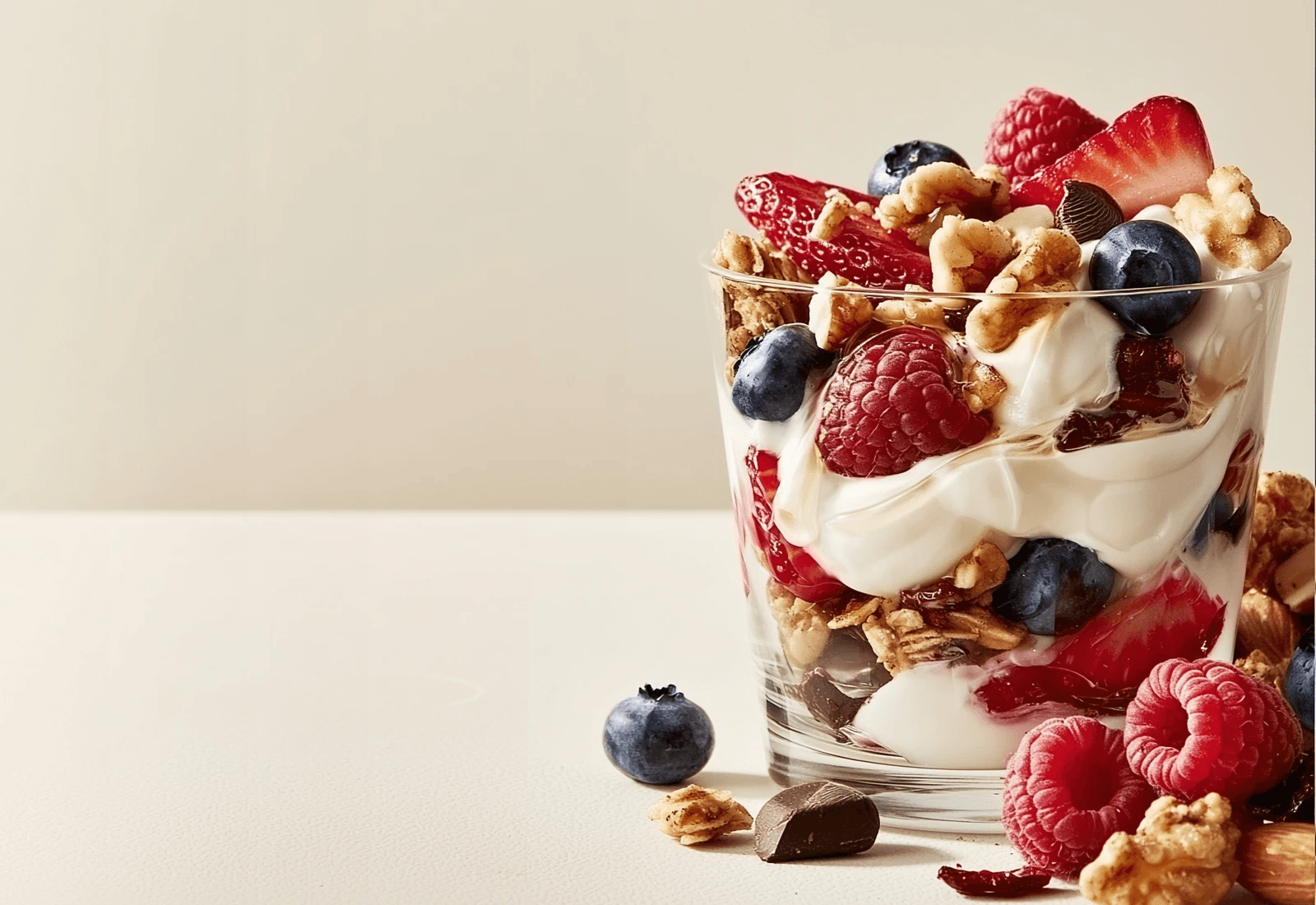
Chocolate-Berry Yogurt Crunch Cups
This month’s recipe isn’t here because it’s “guilt-free.” Food doesn’t need to earn that label. It’s here because it’s delicious, satisfying, simple to make, and provides a combination of carbohydrate, protein, fat, fiber, and enjoyment.
Ingredients
¾ cup plain or vanilla Greek yogurt
½ cup strawberries, raspberries, or blueberries
2 tablespoons granola
1 tablespoon chopped walnuts or almonds
1 tablespoon dark chocolate chips or chopped chocolate
Optional drizzle of honey or maple syrup
Sprinkle of cinnamon, if desired
Directions
Spoon half of the yogurt into a bowl or glass.
Add a layer of berries and granola.
Add the remaining yogurt.
Top with nuts, chocolate, and additional berries.
Add honey or maple syrup if you’d like additional sweetness.
Sit down and enjoy it!
Make It Yours
Prefer another fruit? Use it.
Don’t eat dairy? Choose a nondairy yogurt that works for you.
Want more granola or chocolate? That’s okay too.
Nutrition doesn’t have to be an exercise in making every ingredient as “healthy” as possible. Satisfaction matters.
Ask Yourself
A Gentle Food Relationship Check-In
There are no right or wrong answers. Simply notice what comes up.
Do I regularly feel guilt after eating certain foods?
Are there foods I avoid primarily because I believe I “shouldn’t” eat them?
Do I allow myself to eat when I’m hungry?
Do my meals usually leave me physically and emotionally satisfied?
Can I enjoy foods that are meaningful to me without feeling that I need to compensate afterward?
How much mental space does thinking about food, weight, or eating take up in my day?
What would I like my relationship with food to feel like?
When You May Need a Little More Support
Developing a more peaceful relationship with food can take time, and sometimes additional support can help.
At Buffalo Nutrition & Dietetics, all of our dietitians support patients in improving their relationship with food, navigating disordered eating patterns, and incorporating intuitive eating principles alongside individualized nutrition care. Whether you’re working on recognizing hunger and fullness cues, moving away from food rules, finding greater flexibility with eating, or simply wanting food to take up less mental space, these concerns can be an important part of your nutrition care.
For individuals who are experiencing an eating disorder and need specialized nutrition support, our team also includes Julia Stankowski, MS, RDN, CDN, CLC, who specializes in eating disorder nutrition care.
Wherever you are in your relationship with food, you deserve nutrition care that considers not only your physical health, but your experience with food as a whole.
August Wellness Reminder
You don’t have to choose between caring about nutrition and enjoying food. You don’t have to eat perfectly to support your health.
And one meal, snack, dessert, vacation, celebration, or difficult day does not define your overall eating pattern.
This month, consider giving yourself a little less judgment and a little more curiosity.
Because a nourishing relationship with food includes what is on your plate and how you feel sitting in front of it.